 Skip to content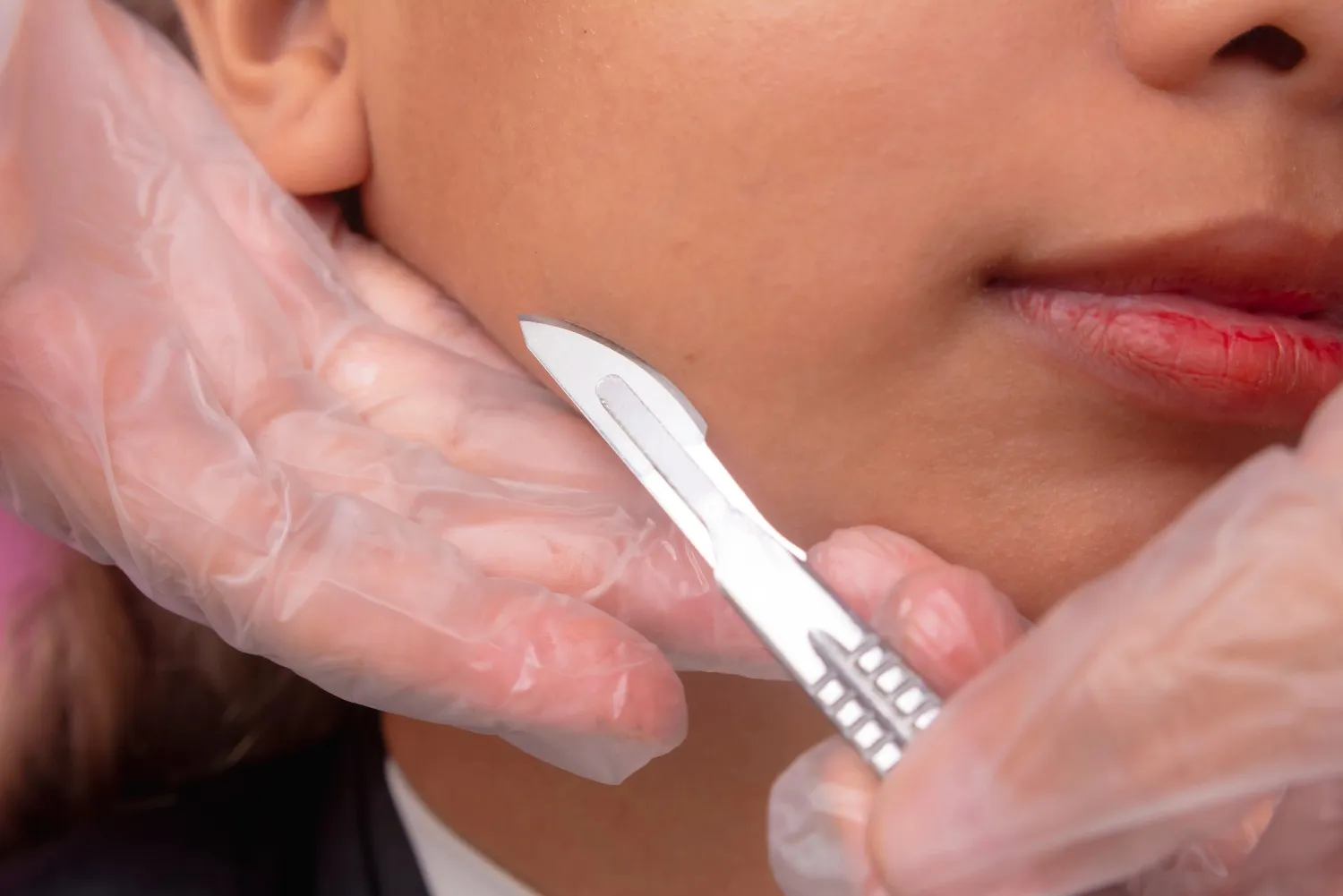
If you have ever run your fingers over your cheek a few days after a smoothing treatment and felt a faint roughness, it makes sense to wonder what is happening under the surface. That moment is exactly where the most common dermaplaning myths start.
Does dermaplaning cause hair to grow back thicker? At Emily Frost Aesthetics, we hear this concern often from patients researching dermaplaning in Mesa, AZ, so this guide walks through what is real, what only feels real, and why.
Does dermaplaning make facial hair grow back thicker or darker?
No, dermaplaning does not change the thickness, color, or growth rate of your facial hair. The treatment removes fine hair at the skin’s surface, and any change you notice in the texture of regrowth is temporary and depends on how the hair was cut, not on the hair itself.
Dermaplaning is a surface treatment, and that single fact explains most of what follows. A trained provider holds a sterile surgical blade at a precise angle and gently glides it across the skin to exfoliate the top layer of dead skin cells and remove fine facial hair. The work happens entirely on the surface.
The hair it removes is vellus hair, the soft, light, fine hair most people call “peach fuzz.” Vellus hair differs from coarse terminal hair, such as eyebrows, eyelashes, or a man’s beard. These two hair types are structurally distinct, and one does not convert into the other.
Because the blade only targets the visible hair and the outermost layer of skin, it never reaches the structures beneath that govern how hair actually grows. Among the dermaplaning benefits patients notice most are smoother texture, brighter-looking skin, and makeup that sits more evenly. None of those results involve altering the hair itself.
Hair thickness, color, and growth speed are all determined by the hair follicle, which sits well below the skin’s surface. A dermaplaning blade works above that level and never contacts the follicle. Since the follicle is what dictates the characteristics of each strand, and the follicle is left completely untouched, the hair that regrows is the same hair it always was.
This is the same biology behind a myth many people grew up hearing about shaving. Shaving a leg or an arm does not make the hair thicker, either. The idea that dermaplaning hair growth somehow becomes coarser is a long-standing misconception rather than a clinical reality. What changes is perception, not the strand.
Regrowth can feel coarser for a short time, and there is a simple physical reason that has nothing to do with the hair becoming thicker. The explanation lives entirely in the shape of the hair’s tip.
Untouched vellus hair has a naturally fine, tapered tip. When a blade cuts across that strand, it leaves a blunt, flat edge instead of a soft taper. That blunt edge is what your fingertips register.
So the roughness some people feel is real as a sensation, but it is not evidence of thicker hair. It is the difference between a cut edge and a natural tip. Understanding this distinction clears up most worries about dermaplaning side effects related to hair, since the change is cosmetic and temporary rather than structural.
Your facial hair is shaped by factors that a surface treatment cannot influence. Knowing the real drivers helps put the regrowth myth to rest for good.
The genuine influences on facial hair thickness and density include:
Hormonal shifts deserve a specific mention because they are often the real explanation when someone notices a change. Pregnancy, menopause, and conditions such as PCOS can all alter facial hair, and none of these has any connection to dermaplaning. If you observe a true change in how your hair grows, the cause sits with one of these factors rather than with the treatment.
A few related questions come up almost every time, so here are the answers.
Will the hair be gone permanently, or does it grow back? The hair grows back. Dermaplaning is not a permanent hair removal method; it removes vellus hair temporarily at the surface.
How long until the hair returns? Most people notice regrowth within a few weeks, though the exact timing varies from person to person.
Is dermaplaning the same as shaving? It uses a similar cutting principle, but it is performed with a specialized blade, a precise angle, and professional technique, and it also exfoliates the skin at the same time. That dual benefit is part of what sets it apart.
Can it turn peach fuzz into dark, coarse hair? No. Vellus hair cannot transform into terminal hair simply from being cut at the surface, because the follicle that determines hair type is never altered. This is also clear in dermaplaning before and after results, where the same fine hair returns rather than anything coarser.
Dermaplaning removes fine facial hair without changing how it grows back, so the smoother, brighter result you see is all upside with no hidden trade-off. Our customized dermaplaning treatments gently exfoliate the skin and remove peach fuzz for a softer, more radiant complexion with little to no downtime. Schedule your visit today, and one of our providers at Emily Frost Aesthetics will help you decide whether dermaplaning fits your skin and your goals.